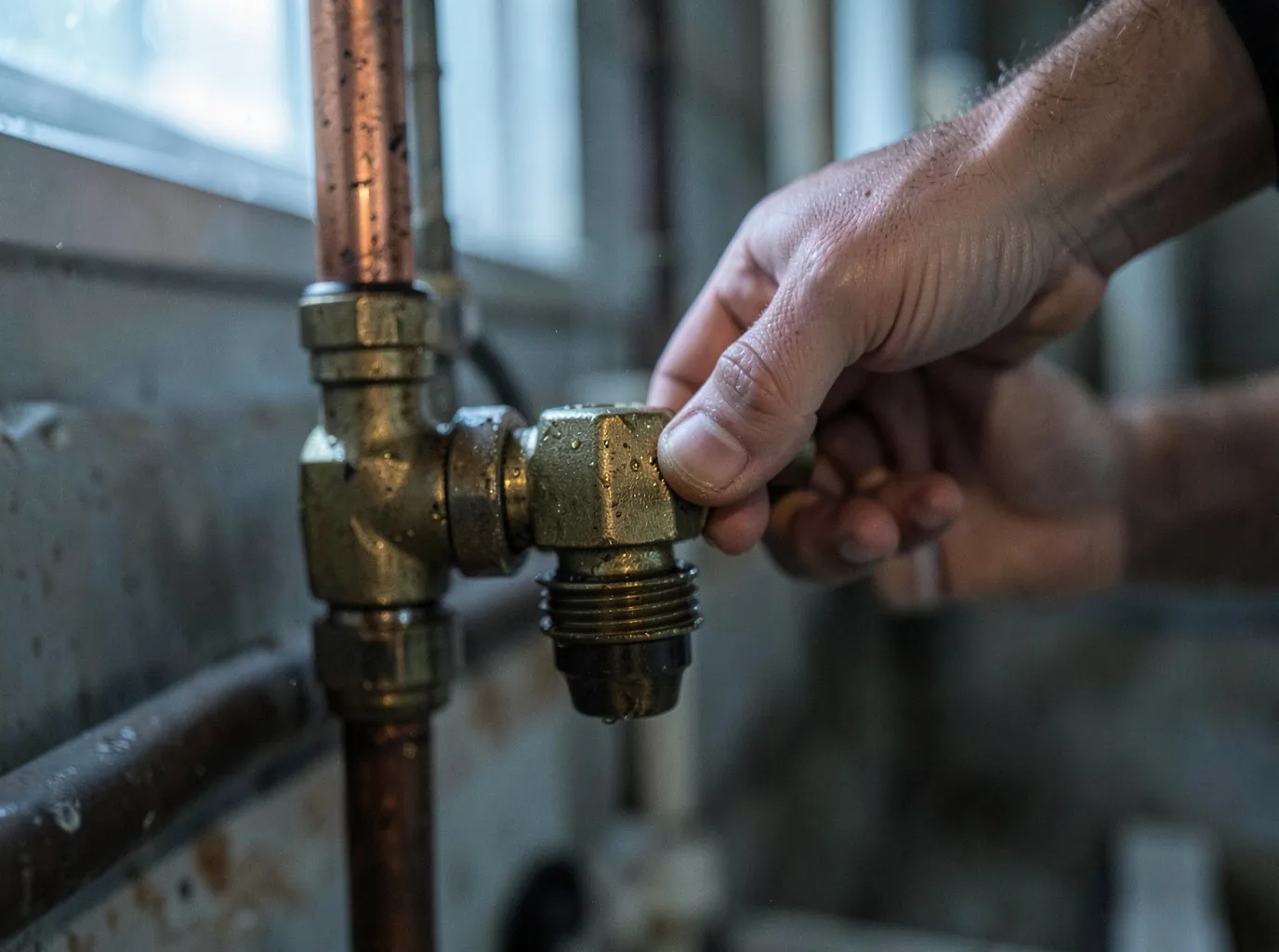
Cold snap hits, and suddenly a faucet that worked fine yesterday gives you nothing. Or worse, a trickle, then nothing, then you notice a bulge in the pipe under the sink. A frozen pipe is a race against time, because a frozen section that's about to split doesn't always wait for a thaw to do it.
How To Tell A Pipe Is Frozen
The classic sign is a faucet with little or no water pressure during or right after a cold spell, while other fixtures in the house still work fine (that tells you the freeze is isolated to one line, not a whole-house problem). Other signs: frost visible on an exposed pipe, a section of pipe that's noticeably colder to the touch than the rest, or a faint smell coming from a drain, which can mean a vent pipe froze and trapped sewer gas that would normally escape through the roof.
Pipes most likely to freeze are the ones without much protection: lines running along exterior walls, pipe in an unheated basement, crawlspace, attic, or garage, and any exposed outdoor spigot or hose bib that wasn't shut off and drained before winter.
Turn Off The Water First
If you suspect a pipe is frozen, especially if you can see it's bulging or hear it, shut off the main water valve before doing anything else. A frozen pipe that's under pressure from ice expansion can crack even while still frozen, and the actual leak won't show up until it thaws, sometimes hours later when you're not expecting it. Shutting the main off first means if it does crack, you're not dealing with a flood on top of a freeze.
Then call (831) 300-2203 to reach a plumber working in Braggadocio, MO. If you're comfortable trying to thaw a clearly identified, accessible section yourself while you wait, a hair dryer on low, held a few inches away and moved continuously, or towels soaked in hot water wrapped around the pipe, are reasonably safe options. Never use a propane torch, blowtorch, or any open flame near a pipe, that's how house fires start, especially near wood framing or insulation. Never use anything electric near standing water either.
Why Pipes Freeze In The First Place
Water expands about 9 percent as it turns to ice, and if it's sealed inside a pipe with no room to expand, pressure builds until something gives, usually at a joint or a weak point in the pipe wall. Pipes freeze when they're exposed to sustained cold without enough insulation or heat around them: an exterior wall in an older house with thin insulation, a crawlspace vent left open in winter, a garage where a water line runs along an uninsulated wall, or a vacant property where the heat got turned down or off entirely.
Copper and PEX both freeze and can both crack, though PEX has a bit more flexibility that sometimes helps it survive a freeze that would split copper. Older galvanized pipe, already weakened by internal corrosion, is often the first to go.
What The Plumber Does
First, confirm where the freeze actually is, which isn't always obvious since ice can form well away from the coldest-looking spot. The plumber checks exposed sections, traces the line back from the affected fixture, and looks for the coldest, least-protected stretch of pipe, often near an exterior wall or where the line passes through an unheated space.
Thawing a pipe professionally uses controlled heat: electric heat tape, a heat gun used carefully, or in some cases a specialized pipe-thawing machine that runs a low-voltage current through the metal pipe itself to melt the ice from the inside without an open flame anywhere near the structure. If the pipe already cracked, thawing it just reveals the break, and the plumber moves straight into repair, the same process covered on our burst pipe repair and leaking pipe repair pages.
Once the pipe is clear and repaired if needed, a good plumber will also point out what made that section vulnerable in the first place, so you can add insulation, heat tape, or reroute the line before the next cold snap.
What Moves The Price
Access is usually the biggest factor: a pipe you can reach easily costs less labor than one buried in a wall or a cramped crawlspace. Whether the pipe actually cracked versus just froze also matters, a straightforward thaw is a shorter job than a thaw-plus-repair. Time of year and time of day (after hours during a hard freeze, when every plumber in town is getting the same calls) can affect availability too. The plumber gives you a price after seeing the situation, not before.
What To Do Before The Plumber Arrives
- Shut off the main water valve if you suspect a crack, or even just to be safe
- Open the affected faucet slightly so melting ice has somewhere to drain and relieves pressure as it thaws
- Apply gentle heat if the frozen section is visible and accessible (hair dryer, warm towels), never an open flame
- Keep cabinet doors open under sinks along exterior walls to let household heat reach the pipes
- Let a trickle run from faucets on the coldest nights going forward, moving water resists freezing better than still water
Why Call This Line
You're not calling a company that sends its own crew, you're calling a referral line that connects you with an independent plumber already working in Braggadocio, MO. That plumber decides how to thaw the pipe, does the repair if it cracked, and sets the price on site. What you get from calling is speed and one point of contact instead of working the phones yourself during a cold snap when every plumber's line is busy. The line at (831) 300-2203 runs around the clock all winter.
Questions people ask about frozen pipe thawing
How long does it take for a frozen pipe to thaw on its own? It depends on the outside temperature and how well insulated the space is, sometimes hours, sometimes it stays frozen for days during a sustained cold snap. Waiting it out isn't always safe, since a cracked pipe won't leak until it thaws, often when nobody's watching.
Is it safe to use a hair dryer to thaw a frozen pipe? Generally yes for an exposed, accessible section, kept moving and on a low or medium setting, never left in one spot. Avoid anything with an open flame, and never use an electric device anywhere near standing water.
Why did my pipe freeze if my heat is on? Pipes running through unheated or poorly insulated spaces, exterior walls, crawlspaces, garages, attics, don't get much benefit from the thermostat setting in the living space. Those areas can drop well below the indoor temperature during a hard freeze even with the furnace running normally.
Can a frozen pipe burst even if I never see water? Yes. The pressure from expanding ice can crack a pipe while it's still frozen solid, and the crack doesn't leak until the ice inside melts. That's why shutting off the main water valve as a precaution, even before you're sure there's a break, is a reasonable move.
How do I keep my pipes from freezing again next winter? Common fixes include adding pipe insulation sleeves, installing heat tape on the most exposed sections, sealing drafts near where pipes run through exterior walls, and keeping cabinet doors open on the coldest nights. A plumber can point out which sections of your specific setup are most at risk.
If a faucet in Braggadocio, MO just went dry during a freeze, shut off the main water valve and call (831) 300-2203 to get connected with a plumber who handles this safely.